CarLevel Insights – Let’s be honest—most of us don’t wake up excited to read about insurance. But the moment something unexpected happens to our car, insurance suddenly becomes very interesting. That’s where Comprehensive Insurance comes in. It’s one of those coverages that people often skip because it feels optional, or because the name sounds like it covers “everything,” so we assume it’s expensive or unnecessary. But in real life, Comprehensive Insurance can be the difference between a manageable problem and a financial headache that follows you for weeks.

In this guide, we’re going to explain Comprehensive Insurance in a clear way—what it really covers, what it doesn’t cover, how it works, and who should seriously consider it. We’ll keep it practical and easy to understand, so you all can make a smarter decision without feeling overwhelmed by confusing policy language.
What Is Comprehensive Insurance?
Comprehensive Insurance (often called “comp coverage”) is a type of auto insurance that helps pay for damage to your car caused by events other than a collision with another vehicle. That’s the key idea, and once you understand that, the rest becomes much easier.
A lot of people hear “comprehensive” and assume it means total protection for every situation. In reality, it covers a wide range of problems, but it still has rules and boundaries. Think of it as protection against “unexpected events” that can damage your car even if you’re not driving, and even if you did nothing wrong.
For example, if your car gets stolen, damaged by a storm, vandalized in a parking lot, or hit by a falling object, Comprehensive Insurance is often the coverage that helps you recover financially. It focuses on protecting your vehicle from random, non-collision events that can be expensive and stressful to handle alone.
So if you’re someone who parks outside often, lives in an area with extreme weather, or simply wants fewer financial surprises, Comprehensive Insurance can be a smart layer of protection to add to your policy.
What Comprehensive Insurance Really Covers
Now let’s get into the part you all actually care about: what Comprehensive Insurance really covers in real life. Most insurance pages online list the same items, but we want to explain them in a way that feels practical—because knowing the list is one thing, but understanding how it applies to your situation is what matters.

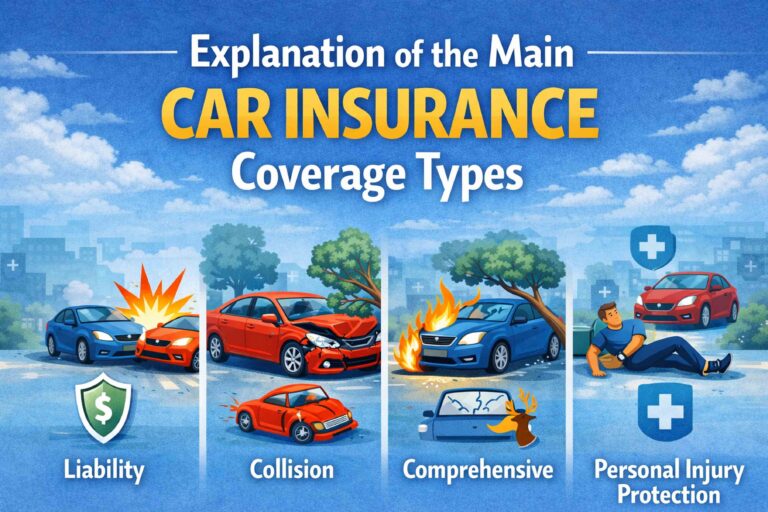
In general, Comprehensive Insurance covers damage to your car caused by things like theft, vandalism, fire, weather events, animals, and falling objects. These are incidents that usually happen unexpectedly, and they can be expensive because they often involve bodywork, glass repair, interior damage, or full replacement in serious cases.
Here are the most common situations Comprehensive Insurance covers:
Theft
If your car is stolen, Comprehensive Insurance can help cover the value of the car (based on your policy terms and the car’s actual cash value). Even if the car is recovered later, it may have damage from the theft, and that repair cost can also be covered.
Vandalism
If someone scratches your car, breaks a window, damages your mirrors, or causes other intentional damage, Comprehensive Insurance typically covers the repair costs. Vandalism is frustrating because it feels unfair—and it is—but at least you’re not stuck paying for everything out of pocket.
Fire
Car fires can happen from engine issues, wiring problems, or external sources like wildfires. Comprehensive Insurance can help cover repair or replacement depending on the severity of the damage.
Coverage for Weather and Natural Disasters
This is one of the biggest reasons people keep Comprehensive Insurance, especially in areas where weather changes fast.
Storms don’t ask permission. A heavy wind can knock down a branch. Hail can destroy your hood and roof in minutes. Floodwater can ruin your interior and electrical system.
And here’s the harsh truth: weather damage is often not “small damage.” It can be a total loss.
With Comprehensive Insurance, you’re building financial protection against events you can’t control, even if you’re the safest driver on the road.
Falling Objects
A tree branch falling on your car, construction debris, or even something dropping from above can be covered. This is one of the most “random” types of damage, and it’s exactly why Comprehensive Insurance exists.
Animal-Related Damage
People often laugh about “hitting a deer” until it happens.
Animal collisions can cause:
- front-end damage
- broken headlights
- cracked windshields
- radiator damage
- total loss in some cases
Comprehensive Insurance often covers animal-related incidents, which is important if you drive in rural areas or highways where wildlife crossings are common.
Even smaller animals can cause damage in surprising ways. It’s not always about the size—it’s about impact and repair costs.
Glass Damage (In Some Cases)
Windshield cracks and broken glass may be covered under Comprehensive Insurance, depending on your insurer. Some policies offer separate glass coverage, but Comprehensive Insurance is often involved in these types of claims.
The big takeaway is this: Comprehensive Insurance covers the kind of damage that doesn’t come from a typical “crash with another driver,” but can still cost a lot to fix.
What Comprehensive Insurance Does NOT Cover
This section is just as important as the one above, because this is where many people get confused and end up disappointed later. Comprehensive Insurance covers a lot, but it doesn’t cover everything, and it’s not meant to replace every other part of your policy.
In my experience, the most important thing to remember is that Comprehensive Insurance does not cover collision accidents. So, if you hit another vehicle, hit a pole, scrape a wall, or have an accident where your car is damaged due to impact while driving, that’s usually covered by collision coverage, not comprehensive.
Comprehensive Insurance also doesn’t cover everyday maintenance or mechanical issues. So, things like worn tires, engine damage, brake replacements, oil changes, or transmission problems are not covered by Comprehensive Insurance. Insurance is designed for unexpected damage—not aging or normal wear and tear.
Another thing people misunderstand is personal belongings. If someone breaks into your car and steals your laptop, bag, or phone, Comprehensive Insurance may cover the damage to your car window, but the stolen items themselves are often covered under renters or homeowners insurance instead.
So, my advice is, before you rely on Comprehensive Insurance as a complete solution, it is important to understand its role: it protects your vehicle from non-collision damage, but it does not replace collision coverage, liability coverage, or routine car maintenance.
How Comprehensive Insurance Works (Deductibles and Claims)
Knowing what Comprehensive Insurance covers is helpful, but you all also need to understand how it works when you actually use it. This is where deductibles and claims come in, and these two things can make a huge difference in how useful the coverage feels.
When you file a Comprehensive Insurance claim, you usually pay a deductible first. The deductible is the amount you agree to pay out of pocket before the insurance company covers the rest. So if your deductible is $500 and the repair cost is $2,000, you pay $500 and the insurance covers the remaining $1,500 (assuming the claim is approved and covered).
This is why choosing a deductible matters. A lower deductible usually means higher monthly premiums, while a higher deductible often means cheaper premiums. There’s no perfect number for everyone, but we recommend choosing a deductible that you can realistically afford without stress.
The claims process itself usually involves documenting the damage, submitting photos, filing a report if needed (especially for theft), and getting an estimate from a repair shop. Some claims are simple and fast, while others take longer depending on the situation. But overall, Comprehensive Insurance is designed to reduce the financial burden when unexpected damage happens.
Why Comprehensive Insurance Can Be Worth It
Comprehensive Insurance isn’t just about protecting your car—it’s about protecting your budget and your peace of mind. Even if you’re a careful driver, you can’t control weather, theft, vandalism, or random accidents that happen while your car is parked.
We’ve seen people skip Comprehensive Insurance because they assume “nothing will happen,” and then they face a situation like flood damage or theft and suddenly realize how expensive it is to recover without coverage. The hardest part is that these events feel unfair because you didn’t cause them, yet you still pay the price.
Comprehensive Insurance helps reduce that risk. It gives you a safety net for situations that can be financially heavy, especially if your car is still valuable or you rely on it every day for work and family responsibilities.
If your car getting stolen or damaged would cause major financial stress, Comprehensive Insurance is usually worth considering seriously.
When Comprehensive Insurance Might Not Be Necessary
We also want to be realistic: Comprehensive Insurance isn’t the best option for every car owner. If your car is very old and has low market value, paying for Comprehensive Insurance might not make sense financially.
For example, if your car is worth $2,000 and you’re paying a significant amount every year for Comprehensive Insurance, you might end up spending more on premiums than the car is worth over time. In cases like that, it may be smarter to save money and build an emergency fund instead.
Another situation is when your deductible is very high. If your deductible is so large that most repairs wouldn’t be worth claiming, then the coverage may feel less useful.
So the smarter approach is not blindly choosing Comprehensive Insurance, but checking whether the cost matches your car’s value, your driving habits, and your financial comfort level.
Conclusion
At the end of the day, Comprehensive Insurance is one of the most misunderstood parts of auto insurance. It’s not “everything coverage,” but it is extremely valuable for protecting your car against unpredictable events that can happen even when you’re doing everything right.
It covers things like theft, vandalism, fire, weather damage, animal incidents, and falling objects—basically the kind of damage that doesn’t come from a normal collision. And just as important, it does not cover collision accidents, maintenance, or mechanical failures.
If you all want to make a smart decision, the best question to ask isn’t “Do I need it?” but instead:
“If something random happened to my car tomorrow, could I afford it without stress?”
If the answer is no, Comprehensive Insurance might be exactly the protection you’ll be glad you added.