What Is Liability Car Insurance? If you all have ever shopped for auto insurance, you’ve probably noticed that liability is the one coverage type that shows up everywhere—almost like the non-negotiable part of owning a car. And honestly, that’s because it is. Liability car insurance coverage isn’t flashy, it doesn’t fix your own vehicle, and it’s not something you brag about. But it’s the backbone of the whole system.
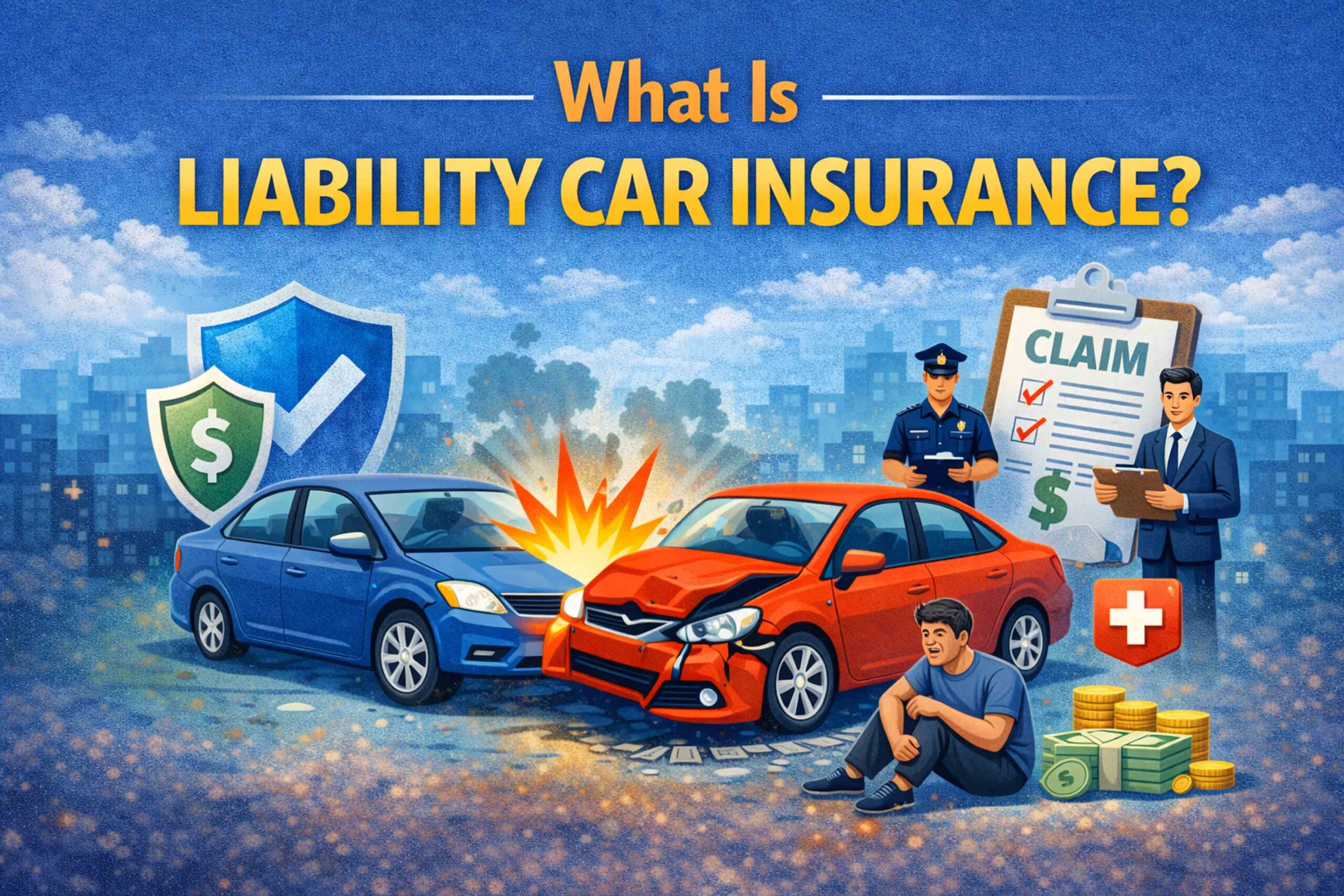
From what we’ve seen, a lot of drivers know they “have to” carry liability, but they aren’t exactly sure what that means or how it’s supposed to protect them. So in this article, we want to talk to you all in a down-to-earth way about what liability insurance really does, where it helps the most, and why nearly every state requires it.
Understanding Liability Insurance
Bodily Injury
Bodily injury liability is the part of your policy that pays when someone else gets hurt because of an accident you all caused. We’re talking about medical bills, follow-up treatments, physical therapy, lost wages, and in some cases even legal fees if the situation becomes complicated.
A lot of drivers underestimate how fast injury costs can pile up. A single ambulance ride plus ER care can climb into thousands of dollars before you blink. So this coverage isn’t just a technical requirement—it’s a real financial shield.
Property Damage
Property damage liability is simpler to grasp. If you hit another car, damage someone’s fence, or—this happens more often than people admit—clip a mailbox or a parked vehicle, property damage liability is what covers repairs.
The tricky part is that repair costs today are higher than ever. Modern cars have sensors, cameras, and electronic components that cost a fortune to replace. Even a minor bumper tap can turn into a four-digit repair bill. That’s why having enough property damage coverage is crucial, not just the state minimum.
What Liability Covers & Doesn’t Cover
Real-World Scenarios
Liability car insurance coverage kicks in when you all cause damage to someone else.
Here are a few examples that reflect what we’ve seen happen in everyday life:
- You rear-end a car at a stoplight → liability covers their repairs.
- You accidentally hit a cyclist → liability covers their medical treatment.
- You slide on wet pavement and hit a store’s front wall → liability covers the damage to the building.
But here’s the part many people misunderstand:
Liability does NOT fix your own car. That requires collision or comprehensive insurance. So if you all cause an accident and your own bumper is crushed, liability won’t pay a cent toward your repairs.
State Requirements
Every state in the U.S. (except New Hampshire and Virginia, in specific conditions) requires drivers to carry liability coverage. But each state sets its own minimum limits. For example, one state may require 25/50/25, while another demands higher numbers.
The problem is that state minimums rarely reflect real-world accident costs. It’s not hard for medical bills or repairs to go far beyond those limits, which is why we always tell drivers not to rely solely on what’s legally required. Think of state minimums as the “bare survival mode” version of insurance—not the ideal setup if you all want real protection.
Who Needs Liability Coverage the Most
New Drivers
New drivers—especially teens or people who just got their licenses—usually face a higher risk of causing accidents simply because they lack experience. Whether it’s misjudging distances, reacting slowly to sudden stops, or getting distracted, the chances of making a mistake are higher in those early years.
For that reason, strong liability limits are incredibly important. If a new driver hits a more expensive car or injures someone, the costs can skyrocket. We’ve seen situations where drivers with low limits ended up paying thousands out of pocket because their policy wasn’t enough.
Owners of Older Vehicles
If you all drive an older car that isn’t worth much, many people choose liability-only insurance. Why? Because carrying collision and comprehensive sometimes costs more than the car itself is worth.
But even if your own vehicle isn’t covered, you still absolutely need liability protection. Damaging a brand-new SUV or injuring a pedestrian costs the same whether you’re driving a ten-year-old sedan or a luxury model. So for older cars, liability becomes the main (and sometimes only) essential coverage.
Conclusion
Liability car insurance may not be the most exciting part of your policy, but it’s the foundation that keeps you all protected against financial fallout when accidents happen. It covers other people’s injuries and property damage when you’re at fault, and it’s required for a reason. Whether you’re a new driver still learning the ropes or someone driving an older car and trying to keep insurance costs manageable, liability coverage is something you simply can’t skip.
Frequently Asked Questions (FAQ)
Does liability insurance cover my own car damage?
No, it only covers damage you cause to others.
Is liability car insurance required in every state?
Almost all states require it, but minimum limits vary.
What does bodily injury liability specifically pay for?
Medical bills, lost wages, legal fees, and rehabilitation for the injured party.
Does liability cover rental cars?
Yes, if you’re driving with your own policy and you cause damage to others.
Is liability coverage expensive?
It’s typically the most affordable part of an auto policy.
Can liability limits be adjusted?
Yes, you all can choose higher limits for stronger protection.
What happens if damages exceed my liability limits?
You may be personally responsible for paying the remaining costs.
Should older cars carry liability-only coverage?
Yes, many drivers choose it when their car’s value is low.
Does liability cover hit-and-run accidents?
It covers the other party’s damages if you cause the accident, not if someone hits you and leaves.
What’s a good liability limit to choose?
Many experts recommend at least 100/300/100 for solid protection.
Auto Insurance Explained: Everything You Need to Know Before Choosing a Policy