Carlevel.biz.id – If you all have ever bought car insurance for the first time, chances are you were told something like, “This meets the state minimum.” And for many drivers, that phrase feels reassuring—almost like a stamp of approval. We’ve heard it countless times. But here’s the uncomfortable truth: meeting minimum car insurance requirements only means you’re legal, not necessarily protected.

From our experience, many drivers don’t realize what “minimum” actually means until after an accident happens. That’s when questions start popping up—Why isn’t this fully covered? Why am I still paying out of pocket? Understanding how state minimums work, and where they fall short, helps you all avoid those surprises before they become expensive lessons.
Why Minimum Requirements Exist
Minimum insurance requirements weren’t created to confuse drivers or push unnecessary policies. They exist for a very specific reason: public protection.
State Regulations
Each state sets its own minimum car insurance requirements based on local laws, traffic patterns, and historical accident data. These regulations are designed to ensure that drivers can cover basic damages if they cause an accident.
That said, states don’t all agree on what “minimum” should look like. One state might require higher liability limits, while another keeps them surprisingly low. The goal isn’t to provide complete financial security—it’s to create a baseline so that injured parties aren’t left with absolutely nothing.
Financial Responsibility Laws
Minimum insurance laws are also tied to something called financial responsibility. In simple terms, states want proof that you all can pay for damages if you cause an accident. Insurance is the most common way to prove that responsibility.
In some states, drivers can technically opt out of insurance by posting bonds or deposits, but for most people, carrying insurance is the practical route. These laws aim to reduce unpaid medical bills, property damage disputes, and legal chaos after accidents.
Typical Minimums Across States
While the exact numbers vary, most state minimums follow a similar structure built around liability coverage.
Liability Limits
Liability limits are usually written as three numbers, such as 25/50/25. These represent:
- Bodily injury per person
- Bodily injury per accident
- Property damage per accident
For example, a 25/50/25 policy means the insurer will pay up to $25,000 for one injured person, $50,000 total per accident, and $25,000 for property damage.
On paper, those numbers may sound reasonable. But in real-world accidents, medical costs alone can exceed those limits quickly—especially when multiple people are involved. This is where minimum car insurance requirements begin to show their weaknesses.
Additional Mandated Coverages
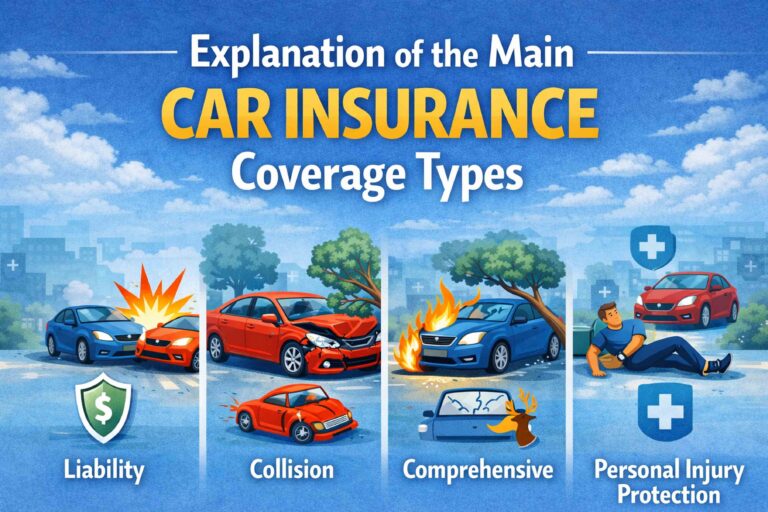
Some states require more than just liability. Depending on where you live, you may also be required to carry:
- Personal Injury Protection (PIP)
- Medical Payments (MedPay)
- Uninsured or Underinsured Motorist Coverage
These add-ons are meant to close certain gaps, especially in no-fault states or areas with high rates of uninsured drivers. However, even with these extras, minimum policies are still designed to be basic—not comprehensive.
Why Minimum Coverage Often Isn’t Enough
Meeting the legal requirement doesn’t always mean meeting real-life needs. This is where many drivers run into trouble. This is exactly why understanding insurance only at the “state minimum” level often leads to false confidence. To really see how liability limits, coverage types, and financial protection fit together beyond legal requirements, it helps to step back and look at the full structure of auto insurance. We’ve broken that foundation down clearly in Auto Insurance Explained: Everything You Need to Know Before Choosing a Policy, especially for drivers who want protection—not just compliance.
Real Cost of Accidents
Accidents are expensive. Not just “new bumper” expensive—but long-term medical care, physical therapy, and legal fees expensive. Even a moderate accident can generate costs far beyond state minimum limits.
Medical bills alone can reach tens of thousands of dollars, especially when emergency services and follow-up treatment are involved. Add modern vehicle repair costs into the mix, and minimum coverage starts looking very thin.
When damages exceed your policy limits, the remaining balance often becomes your personal responsibility.
Coverage Gap Examples
We’ve seen situations where minimum coverage created serious financial strain. Imagine this scenario: you all cause an accident involving two vehicles, and one driver needs surgery. The total cost exceeds your bodily injury limits. Your insurer pays up to the policy maximum—and then stops.
At that point, the injured party may pursue the remaining costs directly from you. This is known as a coverage gap, and it’s one of the biggest risks of relying solely on minimum car insurance requirements.
Even something as simple as hitting a newer SUV can exceed property damage limits due to advanced sensors and repair complexity.
Conclusion
State minimum car insurance requirements exist to keep roads legally functional, not to fully protect your finances. They provide a basic safety net, but they’re not designed to handle worst-case scenarios. While carrying the minimum keeps you compliant with the law, it doesn’t always keep you safe from serious financial exposure.
By understanding what minimum coverage includes—and more importantly, what it doesn’t—you all can make smarter decisions about your policy. Sometimes spending a little more each month can prevent major financial stress down the road. Insurance works best when it reflects real risks, not just legal checkboxes.
Frequently Asked Questions (FAQ)
What are minimum car insurance requirements?
They are the lowest coverage limits required by law in each state.
Do all states have the same minimum requirements?
No, each state sets its own limits.
Is minimum coverage enough after an accident?
Often no, especially for serious accidents.
Why are state minimums so low?
They’re designed as legal baselines, not full protection.
Can I drive legally with only minimum coverage?
Yes, as long as it meets your state’s requirements.
What happens if damages exceed my limits?
You may be personally responsible for the remaining costs.
Do minimum policies cover my own car?
No, liability-only minimums don’t cover your vehicle.
Is uninsured motorist coverage required everywhere?
No, but some states mandate it.
Should new drivers carry more than minimum coverage?
Often yes, due to higher accident risk.
How can I decide the right coverage level?
Consider your assets, driving habits, and financial risk tolerance.