Companies Calculate – At some point, almost everyone asks the same quiet question after opening their insurance bill: Why does this cost what it costs? We’ve asked it ourselves. More than once. Sometimes after a renewal notice arrives with a higher number. Sometimes after comparing notes with someone who swears they’re “basically the same driver” but somehow pays less.
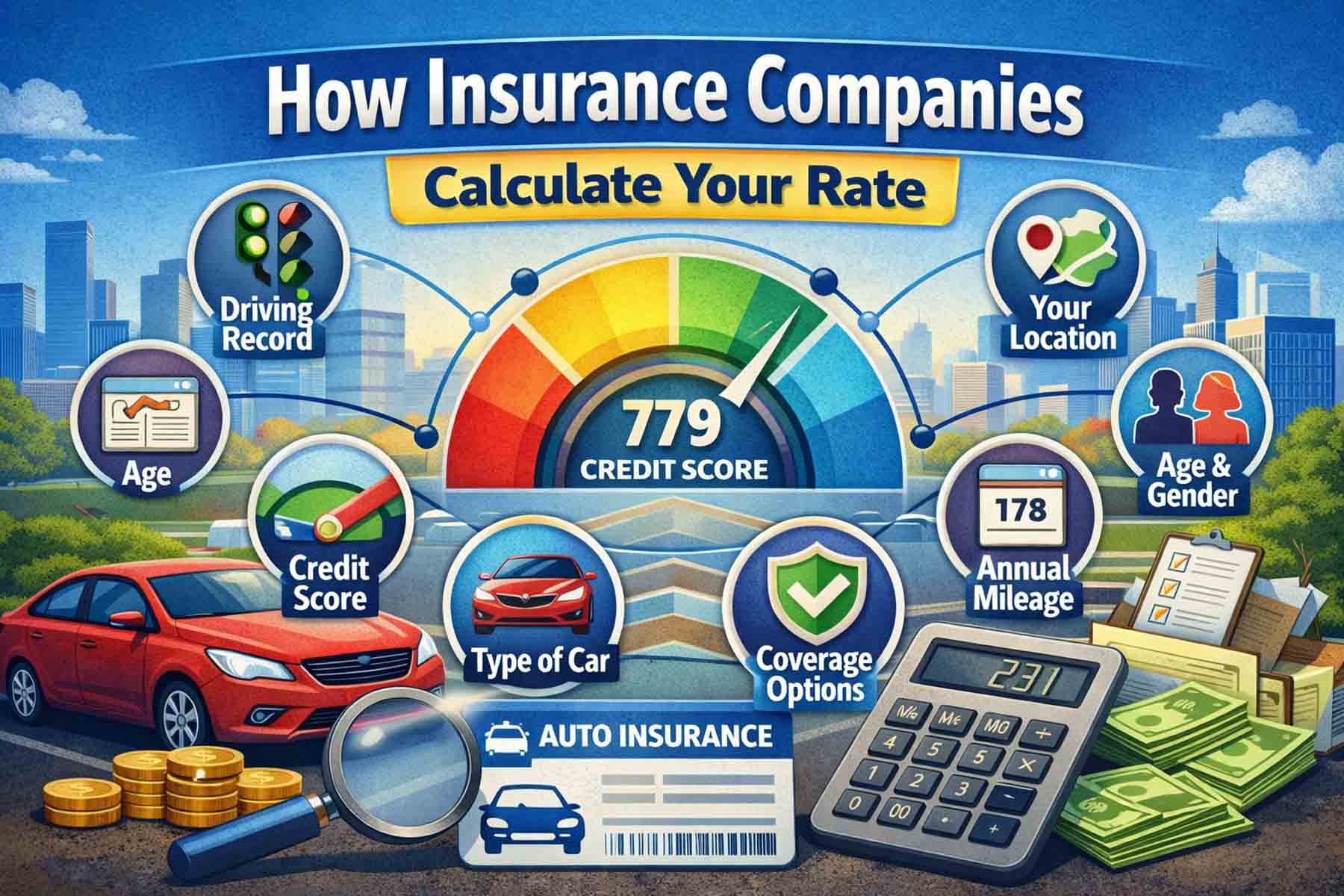
Insurance companies don’t explain this process very well, and that’s part of the frustration. Rates feel personal, even though they’re calculated impersonally. What actually happens is simpler—and more mechanical—than most people expect. Insurers don’t judge character. They judge patterns. And once you understand the factors that affect car insurance rates, the pricing starts to feel less arbitrary and more… predictable. Not cheap. Just predictable.
How Risk Is Scored
Everything starts with risk. Not the dramatic kind, but statistical risk. Insurance companies score how likely you all are to cost them money in the future. That score quietly follows you around, even when you’re not thinking about it.
Traffic Violations
Traffic violations are one of the clearest signals insurers use. Not because one speeding ticket means you’re a “bad driver,” but because patterns matter. Data shows that drivers with violations tend to file more claims later. Insurers trust that data more than any explanation.
Even minor tickets can linger. A quick speed-up on an empty road. A rolling stop that didn’t feel dangerous. Those moments add friction to your risk profile. And while one violation won’t usually destroy your rate, multiple ones start to stack in ways that are hard to undo quickly.
This is why safe driving pays off slowly, not instantly. The system rewards consistency, not apologies.
Claim History
Claim history works in a similar way, but it cuts a little deeper. Filing claims tells insurers that losses are not theoretical for you—they’re real. Even no-fault claims can influence how insurers view future risk.
We’ve seen drivers surprised when a small claim raises their premium later. From the insurer’s side, frequency matters as much as severity. One large claim may be an exception. Several smaller ones suggest a trend. That doesn’t mean you should avoid using insurance, but it does explain why every claim leaves a footprint.
Location & Demographics
Your ZIP code tells insurers a lot. Accident frequency, crime rates, vehicle theft data, traffic congestion, and even weather patterns are all factored into location-based pricing.
ZIP Code
Your ZIP code might be one of the most misunderstood rating factors. Insurers aren’t judging neighborhoods emotionally. They’re reading spreadsheets. Accident density, theft rates, vandalism claims, weather damage, lawsuit frequency—these patterns live inside geographic data.
Two drivers with identical records can pay different rates simply because one lives where accidents happen more often. It doesn’t feel fair, but from an insurer’s perspective, it’s logical. Risk isn’t just about the driver. It’s about the environment surrounding the driver every day.
Annual Mileage
Mileage is quieter but just as important. More miles mean more exposure. More exposure means more chances for something to go wrong.
Drivers with long commutes, frequent road trips, or daily highway use generally pay more. It’s not a punishment. It’s math. If your lifestyle changes—remote work, fewer errands, different routines—this is one of the few factors you all can adjust fairly easily, and sometimes with noticeable impact.
How to Improve Your Rate
While many rating factors are outside your control, not everything is fixed. There are practical steps you all can take to influence your rate over time.
Bundling
Bundling works because insurers value stability. When you combine auto insurance with home or renters coverage, you become a longer-term customer. That matters to them.
For you all, bundling is one of the least effort-heavy ways to reduce premiums. It doesn’t change your risk, but it changes how insurers price your loyalty. It’s not glamorous, but it’s effective.
Adjusting Coverage
Coverage adjustments are where strategy matters. Higher limits and lower deductibles cost more—always. But that doesn’t mean cheaper is better.
If your car is older, paid off, or rarely driven, carrying maximum coverage might not make sense anymore. On the other hand, cutting coverage too aggressively can backfire fast after a serious accident. The goal isn’t the lowest possible premium. It’s avoiding financial regret later. We’ve learned that thoughtful adjustments beat emotional ones every time.
Conclusion
Insurance companies calculate your rate using data, patterns, and probabilities—not intuition. The factors that affect car insurance rates include your driving behavior, claim history, location, mileage, and the choices you make inside your policy.
You can’t control everything, and that’s okay. What you can do is understand the system well enough to work with it instead of guessing. Over time, safe habits and smart adjustments compound. Slowly. Quietly. But reliably. And in insurance, reliability is everything.
Frequently Asked Questions (FAQ)
Why do insurance rates feel inconsistent?
Because small differences in risk data create large pricing differences.
Do traffic tickets always raise rates?
Often yes, especially if they show a pattern.
How long do claims affect insurance pricing?
Usually three to five years.
Does ZIP code really matter that much?
Yes, it reflects accident and crime data.
Can lowering mileage reduce premiums?
In many cases, yes.
Is bundling insurance worth it?
Often, especially for long-term savings.
Should I avoid filing small claims?
It depends on frequency and deductible size.
Do insurers look at personality?
No, only measurable data.
Can rates go down over time?
Yes, with clean records and fewer claims.
What’s the smartest way to manage insurance costs?
Understand risk factors and review coverage regularly.
Auto Insurance Explained: Everything You Need to Know Before Choosing a Policy