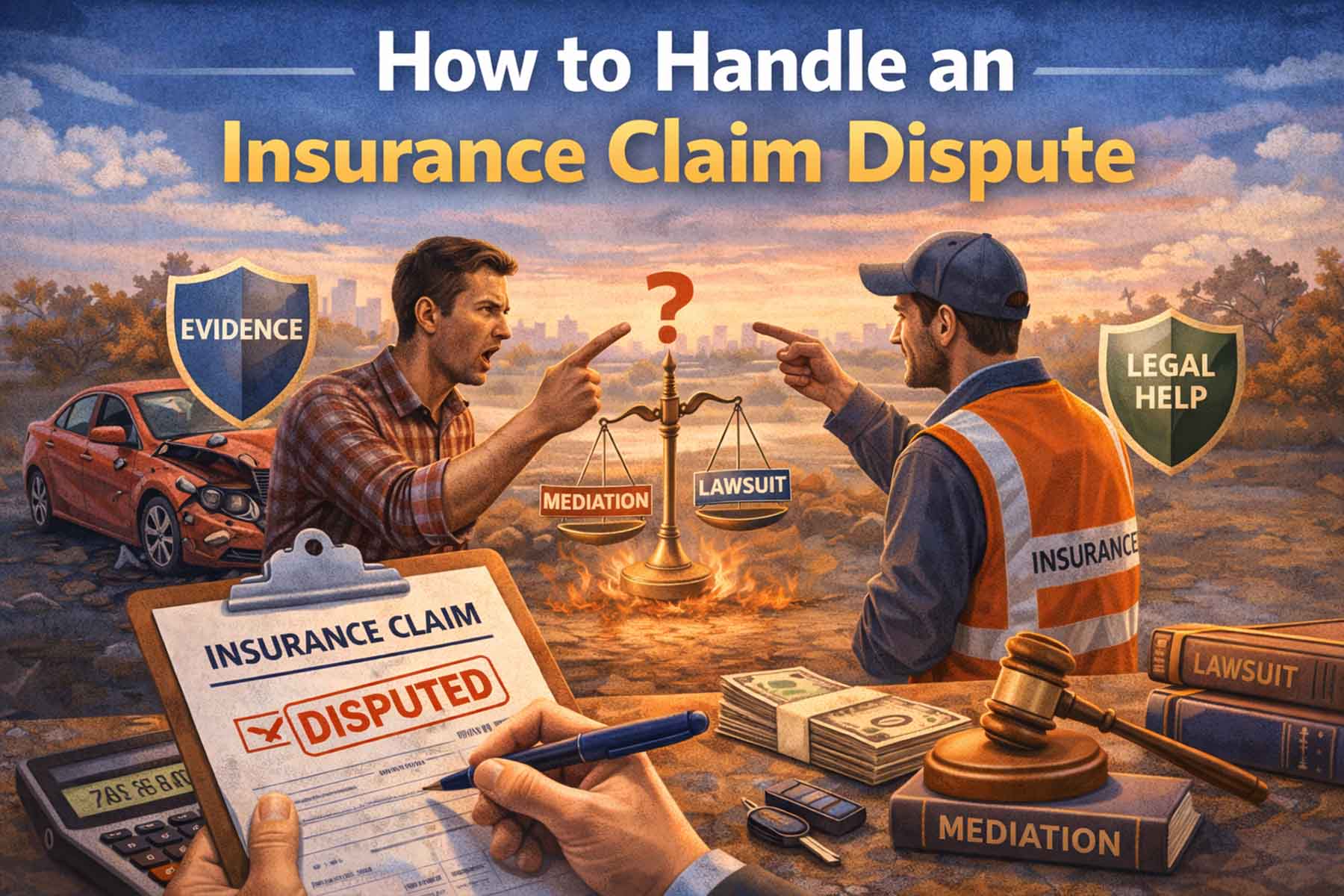
Insurance Claim Dispute – An insurance claim dispute rarely starts with anger. Most of the time, it starts with confusion. You all file a claim expecting a clear process, maybe a few follow-up questions, and then a resolution. Instead, the response feels vague. The settlement amount doesn’t make sense. Or worse, the claim is partially paid or denied without an explanation that feels fair. That moment—when expectations and reality collide—is where most insurance claim disputes begin.
We’ve noticed something interesting over the years. Many drivers assume a dispute means someone is being dishonest. In practice, disputes are often the result of misaligned interpretations, missing context, or unclear communication. Insurance policies are legal documents written to protect both sides, but they’re not always easy to interpret when emotions are high and timelines matter. The good news is that disputes don’t have to spiral out of control. When handled the right way, many can be resolved without courtrooms, lawyers, or endless frustration.
Common Causes of Insurance Claim Disputes
Most insurance claim disputes follow familiar patterns, even if the details differ. One of the most common causes is disagreement over coverage interpretation. Policy language can be technical, layered, and sometimes intentionally broad. What you all believe is covered may not align with how the insurer applies exclusions, limits, or conditions. This doesn’t always mean the insurer is acting unfairly—it often means the policy was never fully understood until something went wrong.
Another frequent trigger is claim valuation. After an accident, repair estimates, medical bills, or vehicle value assessments can vary widely depending on who prepares them. Insurers rely on adjusters, databases, and internal guidelines, while policyholders may rely on body shops or personal assessments. When those numbers don’t match, frustration builds quickly. Add delays, poor communication, or inconsistent explanations into the mix, and a simple disagreement can easily turn into a formal dispute.
Disputes also arise when documentation is incomplete or timelines aren’t followed. Late reporting, missing photos, or unclear accident details can weaken a claim, even if the incident itself was legitimate. From the insurer’s perspective, uncertainty equals risk. From the policyholder’s perspective, it feels like unnecessary resistance. Understanding these root causes helps you all address disputes strategically instead of emotionally.
Steps to Resolve a Claim Dispute
When a dispute surfaces, the instinctive reaction is often to push harder or escalate immediately. In reality, the most effective resolutions usually start with structure and patience. The first step is always clarification. Ask for a written explanation of the decision being disputed, including references to specific policy language and evidence used. Verbal explanations can change; written ones create accountability.
Read More: Your Legal Rights During an Insurance Claim
Next, review your policy carefully—especially exclusions, limits, and definitions. Many disputes soften once both sides are discussing the same clauses instead of assumptions. If you all find gaps, inconsistencies, or overlooked evidence, submit a formal request for reconsideration. This isn’t an appeal yet; it’s a structured challenge supported by documentation. Keep communication factual, organized, and professional. Emotional language may feel justified, but it rarely helps move a claim forward.
If internal communication stalls, escalation within the insurer becomes necessary. Most companies have multiple review layers, including supervisors or specialized dispute units. Each escalation increases scrutiny and often results in a more thorough reassessment. The key is persistence without aggression. Claim disputes are often resolved not by pressure, but by clarity and consistency.
Internal Review vs Legal Action
One of the biggest questions policyholders face is when to stop negotiating internally and consider legal action. Internal review is usually faster, less expensive, and less stressful. It works best when disputes are rooted in miscommunication, valuation differences, or documentation issues. Many insurers are willing to revisit decisions when presented with stronger evidence or clearer arguments.
Legal action, on the other hand, becomes appropriate when internal processes fail or when bad-faith behavior is suspected. This includes unreasonable delays, repeated misrepresentation of policy terms, or settlement offers that clearly contradict documented damages. At this stage, legal counsel helps shift the dynamic. Insurers tend to reassess risk more carefully when disputes move beyond internal channels.
That said, legal action shouldn’t be the default response. It introduces cost, time, and uncertainty. Knowing the difference between a resolvable disagreement and a systemic problem helps you all choose the right path without escalating prematurely.
Avoiding Disputes Before They Start
The easiest insurance claim dispute to resolve is the one that never happens. While no one can prevent accidents, many disputes can be avoided through preparation and awareness. It starts long before a claim is filed—by understanding your coverage, limits, and exclusions at the time of purchase. Policies that are chosen based solely on price often create confusion later.
Documentation also plays a major role. Clear photos, accurate timelines, and consistent statements reduce uncertainty during claim reviews. The more complete your initial submission, the fewer questions an adjuster has to raise. This reduces delays and lowers the chance of conflicting interpretations.
Communication habits matter too. Keeping records of emails, claim numbers, and conversations creates a paper trail that protects you all if disagreements arise. Disputes thrive in ambiguity. Transparency, consistency, and preparation weaken them before they gain momentum.
Conclusion
An insurance claim dispute doesn’t mean you’ve lost control—it means the process needs direction. Most disputes are not battles; they’re negotiations shaped by information, clarity, and persistence. Understanding why disputes happen, how to address them methodically, and when to escalate gives you all leverage without unnecessary conflict.
We believe the strongest position in any claim dispute comes from preparation, not pressure. When you know your policy, document thoroughly, and communicate strategically, disputes become manageable instead of overwhelming. Insurance is meant to provide protection, not frustration—and with the right approach, you can hold the process accountable.
Frequently Asked Questions (FAQ)
1. What is an insurance claim dispute?
An insurance claim dispute occurs when a policyholder disagrees with an insurer’s decision, valuation, or delay.
2. Are claim disputes common?
Yes. Many disputes arise from coverage interpretation, valuation differences, or documentation issues.
3. Should I dispute a denied claim immediately?
Start by requesting a written explanation before formally disputing the decision.
4. Can disputes be resolved without legal action?
Most disputes are resolved internally through clarification and escalation.
5. When should I hire a lawyer for a claim dispute?
When internal reviews fail or bad-faith behavior is suspected.
6. Does disputing a claim hurt future coverage?
Legitimate disputes generally do not affect future eligibility.
7. How long do claim disputes usually take?
Resolution timelines vary, but structured communication often speeds things up.