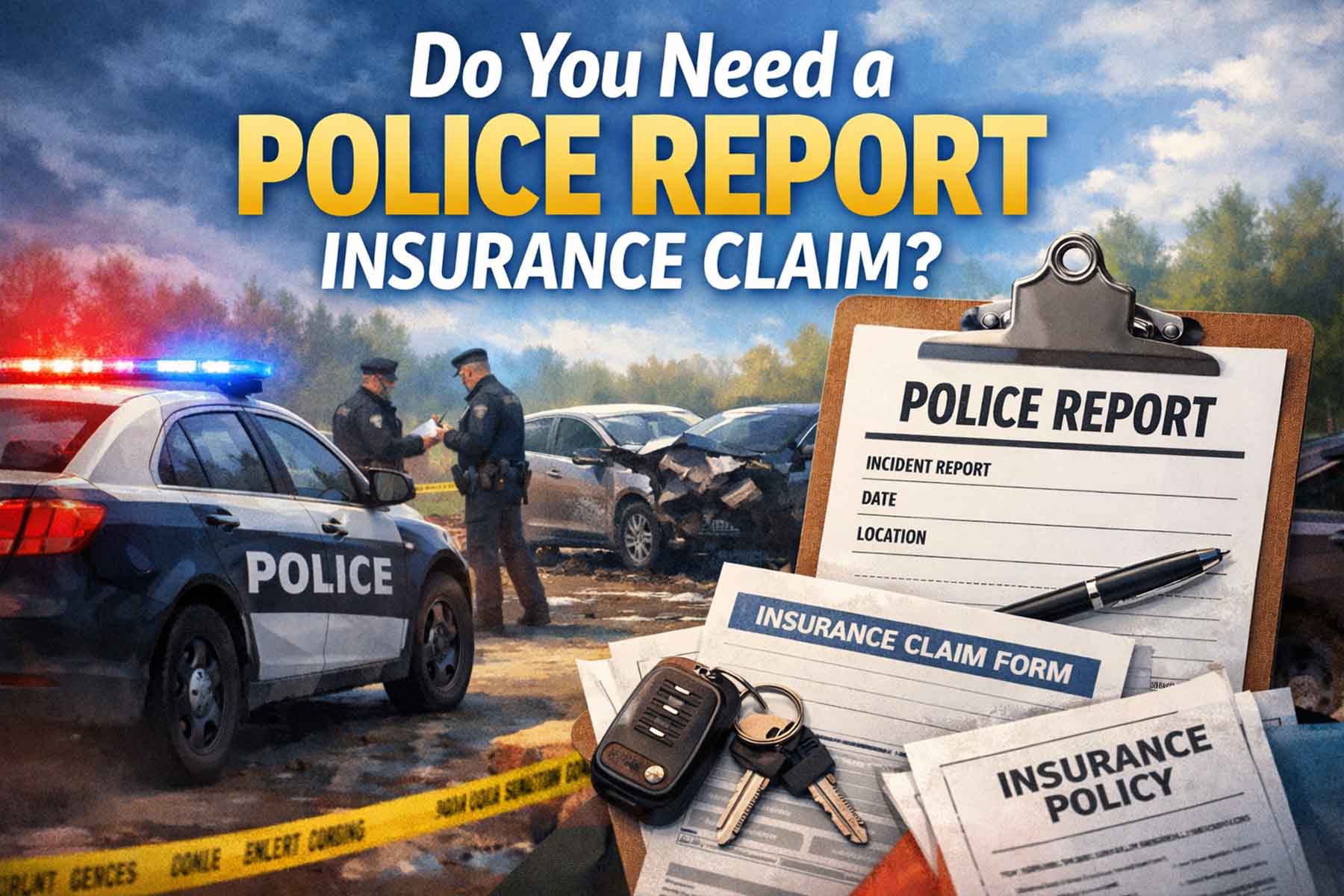
Carlevel.biz.id – After an accident, most of you all are still trying to catch your breath, check for damage, and figure out what just happened. Somewhere in that moment, a question almost always comes up: Do we actually need a police report for an insurance claim?
We’ve seen this confusion firsthand. Some drivers assume a police report is mandatory no matter what. Others skip it entirely, thinking insurance companies don’t really care. The truth sits somewhere in between, and understanding it can save you all a lot of stress later.
A police report can play a major role in an insurance claim, but it isn’t always required. What matters is the situation, local laws, and how insurers evaluate risk and responsibility. In this article, we’ll walk you all through when a police report is required, how it affects your insurance claim, and what options you still have if no report exists.
When a Police Report Is Required
Accidents Involving Injuries or Fatalities
When an accident involves injuries or, in the worst cases, fatalities, a police report is almost always required. In many states, the law mandates that law enforcement be notified immediately when someone is hurt.
From an insurance perspective, injury-related claims carry higher financial risk. Medical bills, lost wages, and potential liability disputes quickly raise the stakes. Insurers rely heavily on police documentation in these situations because it provides an official, third-party account of what happened. Read More: How Insurers Detect Fraudulent Claims
For you all as policyholders, calling the police protects more than just legal compliance. It creates a formal record that can help prevent disputes later, especially if injuries worsen over time or another party changes their version of events.Major Property Damage or Hit-and-Run Cases
Significant property damage is another common trigger for mandatory police reports. While “major damage” is defined differently depending on location, insurers generally treat any accident involving high repair costs as serious.Hit-and-run cases are even clearer. If another driver leaves the scene, a police report becomes essential. Without it, proving that a hit-and-run occurred is extremely difficult, and insurers may question the legitimacy of the claim.We’ve seen claims delayed or denied simply because no report existed to confirm when and where the damage occurred. Even when coverage technically applies, the absence of documentation can slow everything down.
State Laws and Local Reporting Requirements
Many people forget the fact that police report standards vary by state and even locality. Some states demand reporting for accidents involving a certain dollar amount of damage. Others concentrate on injuries, traffic obstructions, or commercial vehicles.
Insurance companies often follow state reporting laws closely. If local law requires a report and none exists, insurers may treat that as noncompliance, even if the accident itself was minor.
For you all, knowing your local requirements isn’t just about obeying the law—it’s about protecting your claim before it ever reaches an adjuster’s desk.
How Police Reports Affect Insurance Claims
Establishing Fault and Liability
One of the most important roles of a police report is to help establish fault. While police officers don’t always directly assign blame, their observations are crucial. Details such as road conditions, vehicle position, witness statements, and traffic violations provide context to insurance companies.
Insurance companies use this information to determine the percentage of liability. Even a finding of partial fault can affect how much compensation you receive or whether your premiums will increase.
Without a police report, insurers rely more heavily on statements from involved drivers—which often conflict. That uncertainty can work against you all, especially if the other party disputes responsibility.
Preventing Claim Disputes
Disputes are one of the biggest reasons claims drag on for weeks or months. A police report doesn’t eliminate disputes entirely, but it reduces them.
When there is an official record, insurers are less likely to disagree on fundamental facts such as time, location, or sequence of events. This clarity keeps claims focused on resolution rather than research.
We’ve seen numerous cases when a simple police report may have avoided lengthy back-and-forth with insurance, saving everyone time and frustration.
Speeding Up the Claim Review Process
Insurance adjusters are trained to verify information efficiently. A police report gives them a reliable starting point. Instead of chasing down missing details, they can move straight into evaluating coverage and damages.
For all of you, this often means faster approvals and faster payments. While a police report doesn’t guarantee a smooth claim, it does remove one of the biggest obstacles to timely processing.
In contrast, claims without reports often require additional documentation, follow-up interviews, or even site inspections, all of which extend timelines.
Alternatives When No Report Is Available
Using Photos, Videos, and Witness Statements
Sometimes, calling the police simply isn’t practical. In minor accidents, officers may not respond at all. When that happens, strong alternative documentation becomes critical.
Clear images of vehicle damage, license plates, road conditions, and the surrounding area can be used to reconstruct the incident. Videos filmed quickly after the event can also catch key details that recollection alone may overlook.
Witness statements add another layer of credibility. Independent third-party accounts often carry significant weight with insurers, especially when no police report exists.
Filing an Incident Report After the Fact
In some jurisdictions, you all may still be able to file a police or incident report after leaving the scene. This is often done online or at a local station within a specific time frame.
While post-incident reports aren’t always as strong as on-scene reports, they still provide an official record. Insurers generally view them more favorably than having no report at all.
If you’re unsure whether this option exists in your area, checking local law enforcement websites or asking your insurer directly can clarify your next steps.
Conclusion
Do you always need to file an insurance claim based on a police report? Not usually, but skipping one when it’s necessary can put you at undue risk. Particularly in major accidents, police reports aid in establishing facts, minimizing disagreements, and expediting the processing of claims.
Situational awareness is the finest strategy for all of you. Recognize local regulations, evaluate the accident’s seriousness, and meticulously record everything. Having a police report often improves your job, even if it’s not required.
Frequently Asked Questions (FAQ)
Do insurance companies always require a police report?
No. Requirements depend on accident severity, state laws, and insurer policies.
Can I file a claim without a police report?
Yes, especially for minor accidents, but additional documentation may be required.
Is a police report mandatory for hit-and-run claims?
In most cases, yes. Insurers rely heavily on reports for hit-and-run incidents.
What if police refuse to come to the scene?
You can document the accident yourself and ask about filing a report later.