How Car Insurance Works – If we’re being honest with you all, most of us don’t really think about car insurance until something goes wrong. It’s a bit like that fire extinguisher in the corner—you all know it’s there, you hope you never need it, and you’re not entirely sure how it works until the moment you’re forced to find out. We’ve been there too.
Over the years, we’ve learned that understanding how car insurance works doesn’t just give you peace of mind—it actually makes you more confident when choosing coverage and handling surprises on the road. So in this guide, we want to walk you all through the whole process, the same way we’d explain it to a friend who just bought their first car and feels a bit overwhelmed. No stiff definitions, no textbook talk—just real, practical insights from start to finish.
If you’d rather start with a bigger-picture explanation before diving into the step-by-step process, we’ve put together a complete breakdown in our main guide on how auto insurance really works.
How Insurance Companies Assess Risk
Insurance companies don’t just pull numbers out of thin air. They size you all up the same way a mechanic looks at a car—checking what might break, what’s in good shape, and what could cause trouble later. It’s not perfect, but it’s their system.
Personal Factors
Whenever you all request a quote, insurers immediately begin dissecting your personal driving “story.” We’ve seen this many times. Your driving record is basically your report card. A clean one? Great. A few dents here and there? They’ll notice.
Age also matters—insurers treat younger drivers like fresh eggs: fragile and unpredictable. And depending on your location, rates might swing dramatically. If you live somewhere with crowded traffic or high theft, your premium reflects that environment. It’s not always fair, but it’s part of how car insurance works behind the scenes.
Vehicle Factors
The car itself plays a starring role in determining your rate. Some cars are simply more expensive to fix, and insurers know it. If your vehicle has newer safety tech, that often helps you all a bit. On the flip side, if your car is a common theft target, it might bump your costs, even if you’re the most careful driver in the neighborhood.
We’ve noticed something interesting over time: drivers often blame the insurer, when really, it’s their car’s design, repair cost, and history that carry a big chunk of the equation.
From Buying a Policy to Filing a Claim
Now let’s talk about the part you all deal with directly: getting insured and knowing what to do when something actually happens. This is the real-world stuff—no fluff.
Getting Quotes
Shopping around for quotes is kind of like checking restaurant menus—you might see the same dish, but every place prices it differently. Insurers ask for your details, run them through their risk system, and spit out a number. Nothing glamorous, but we always tell you all: never stick with the first quote.
It’s surprising how much prices vary for the exact same coverage, so taking a little extra time can save you a lot later.
Activating Coverage
Once you all settle on a policy, coverage usually starts as soon as you make your first payment. Some people get confused and think there’s a long waiting period—usually not true.
We’ve had readers who activated a policy in the morning and needed it that same afternoon. Life happens fast, and insurance companies know it.
Filing a Claim
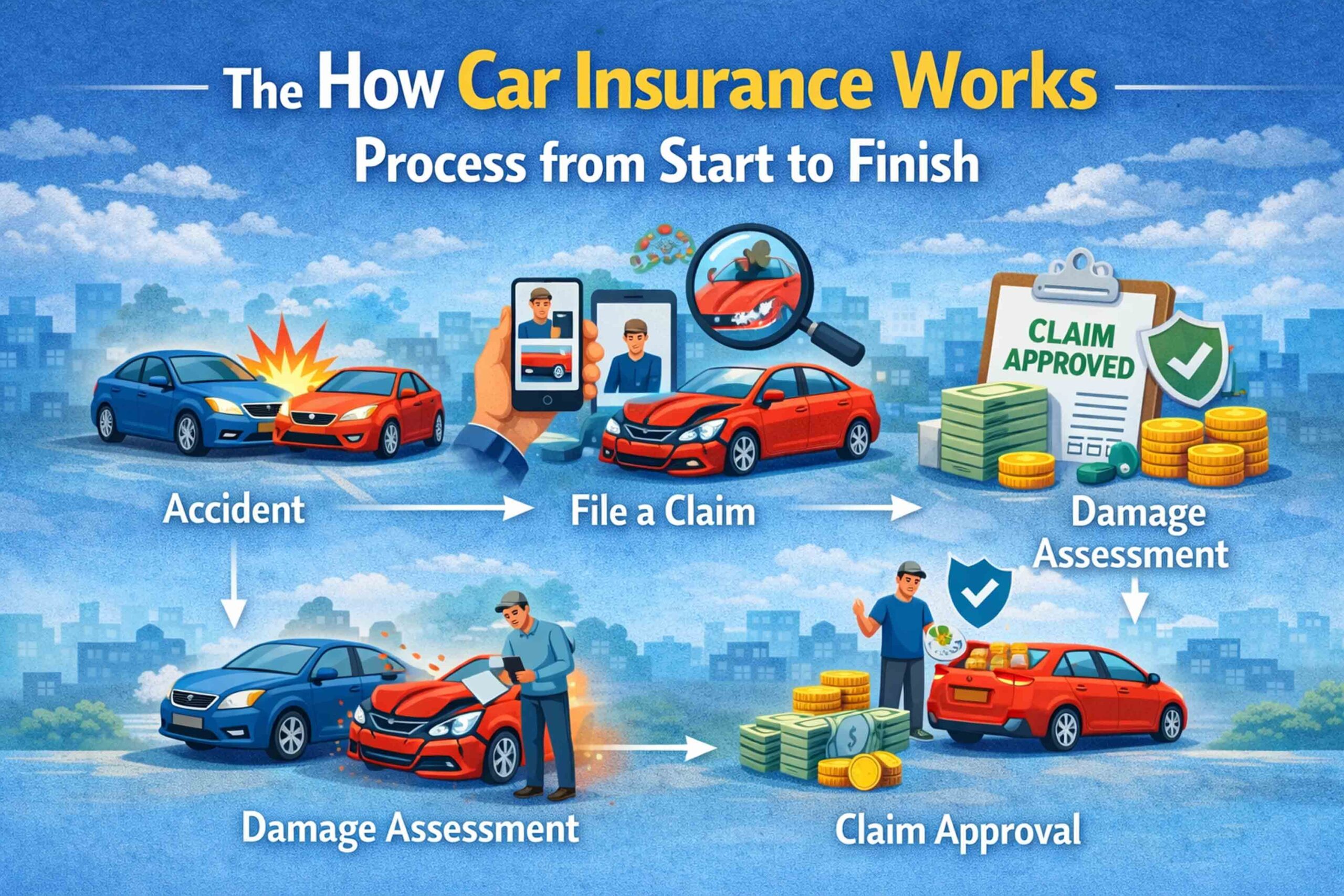
When something goes wrong, the claim process kicks in. It’s one of those moments when your brain goes into overthinking mode: “What do I do first? Call someone? Take photos? Cry?”
Here’s the honest answer:
- Make sure everyone’s safe.
- Document the scene.
- Contact your insurer.
Insurers aren’t expecting a polished report. They just need the basics—what happened, where it happened, who was involved, and any supporting details. The sooner you all report it, the faster they can get things moving.
What Happens After a Claim
This is the part that most drivers rarely see. Once your claim is submitted, the behind-the-scenes machine starts working.
Adjuster Review
An adjuster steps in to study everything. Think of them as the insurance version of a detective, except with a clipboard instead of a badge. They’ll look at damage photos, maybe visit the repair shop, and ask questions to piece together the full picture.
From our experience, the more transparent you all are, the smoother this stage usually goes. The adjuster isn’t there to fight you—they’re there to calculate exactly what the insurer is responsible for.
Settlement Process
Once the adjuster wraps up, the insurer calculates what they owe based on your coverage. The settlement might go directly to you or to the repair shop, depending on how the case works out.
Most people are surprised by how straightforward this part usually is. If your car is repairable, great. If it’s totaled, the insurer pays its actual cash value. It’s rarely a fun moment, but at least the process is predictable.
Conclusion
Understanding how car insurance works isn’t just about being prepared—it’s about not feeling lost when life throws something unexpected at you all. From getting quotes to settling a claim, the whole process becomes far less intimidating once you’ve seen it laid out step by step.
Our goal here isn’t to make you all experts—just informed drivers who know how the system treats them. And with that knowledge, you all make smarter, more confident decisions every time you hit the road.
Frequently Asked Questions (FAQ)
Does filing a claim always increase insurance rates?
Not always. Minor claims or claims where you weren’t at fault may not affect your premium.
How long does it take to settle a claim?
It varies—from a few days to several weeks, depending on complexity and documentation.
Can I choose my own repair shop?
Yes. Most insurers allow it, even if they suggest preferred shops.
What happens if my car is totaled?
The insurer pays the actual cash value (ACV) of your car, minus your deductible.
Do I need to file a police report for every accident?
Not always, but it’s recommended for theft, major collisions, or injuries.
Can I update my coverage after buying a policy?
Absolutely—you can adjust limits, add coverage, or remove coverage anytime.
What if someone else is driving my car during an accident?
In most cases, your insurance follows the car, not the driver.
How do insurers verify information on a quote?
They check driving records, insurance history, and vehicle databases.
Is it possible to track the claim process online?
Many companies now offer online claim tracking through apps or websites.
What should I do immediately after an accident?
Make sure everyone is safe, call authorities if needed, document the scene, and contact your insurer as soon as possible.