What Is Car Insurance – We still remember the first time we tried to understand what car insurance really is. Honestly? It felt like we were opening a box of puzzle pieces that didn’t come with the picture on the front. You all might’ve experienced the same thing—papers everywhere, unfamiliar terms that look like they belong in a courtroom instead of your glovebox, and numbers that seem to pop up like they’re playing hide-and-seek.
Over time, though, we realized something: car insurance isn’t supposed to confuse us. At its core, it’s simply a way for us to avoid getting financially wrecked when life throws something unpredictable our way. And trust us, we’ve had our share of moments on the road where the only thing keeping us sane was a bit of humor and a lot of patience.
So let’s break it down together—calmly, clearly, and in a way that actually feels human.
Understanding What Car Insurance Really Is
If we strip away all the jargon, what car insurance is can actually be explained in a pretty straightforward way. Think of it as support. A backup plan you hope you never need, but you’ll be grateful for if things go sideways. You all know how it goes: even one careless second on the road can change the whole day, and sometimes even your whole month. We’ve put together a broader guide that walks through the full picture in a complete explanation of auto insurance basics.
Car insurance is basically an agreement. You pay a certain amount regularly—your premium—and in return, the insurance company promises to help cover financial losses if something happens to your car or if you accidentally harm someone else’s property. Sounds simple enough, right? And yet, somehow it often gets wrapped in complexity.
Why Car Insurance Exists
Car insurance exists because the road is rarely as predictable as we want it to be. Even the most careful drivers can get caught up in someone else’s bad day. Maybe a sudden downpour makes the road slippery, maybe someone texts while driving, maybe a stray shopping cart decides it wants to be the main character. The point is: unpredictable things happen.
Instead of carrying the entire financial burden yourselves, you all share a little bit of it with an insurer. That’s the whole reason car insurance exists—to lighten the blow when life gets messy.
How Insurers Assess Risk
This part always fascinated us. Insurers basically play detective. They look at things like your age, driving record, where you live, the type of car you drive, how often you’re on the road, and even your claims history. It’s not personal—they’re just trying to predict how likely you are to file a claim.
Some of it makes sense. Some of it makes us raise an eyebrow. But either way, it’s how premiums are determined. Less risk? Lower premiums. More risk? Well… you know.
How Car Insurance Works From Start to Finish
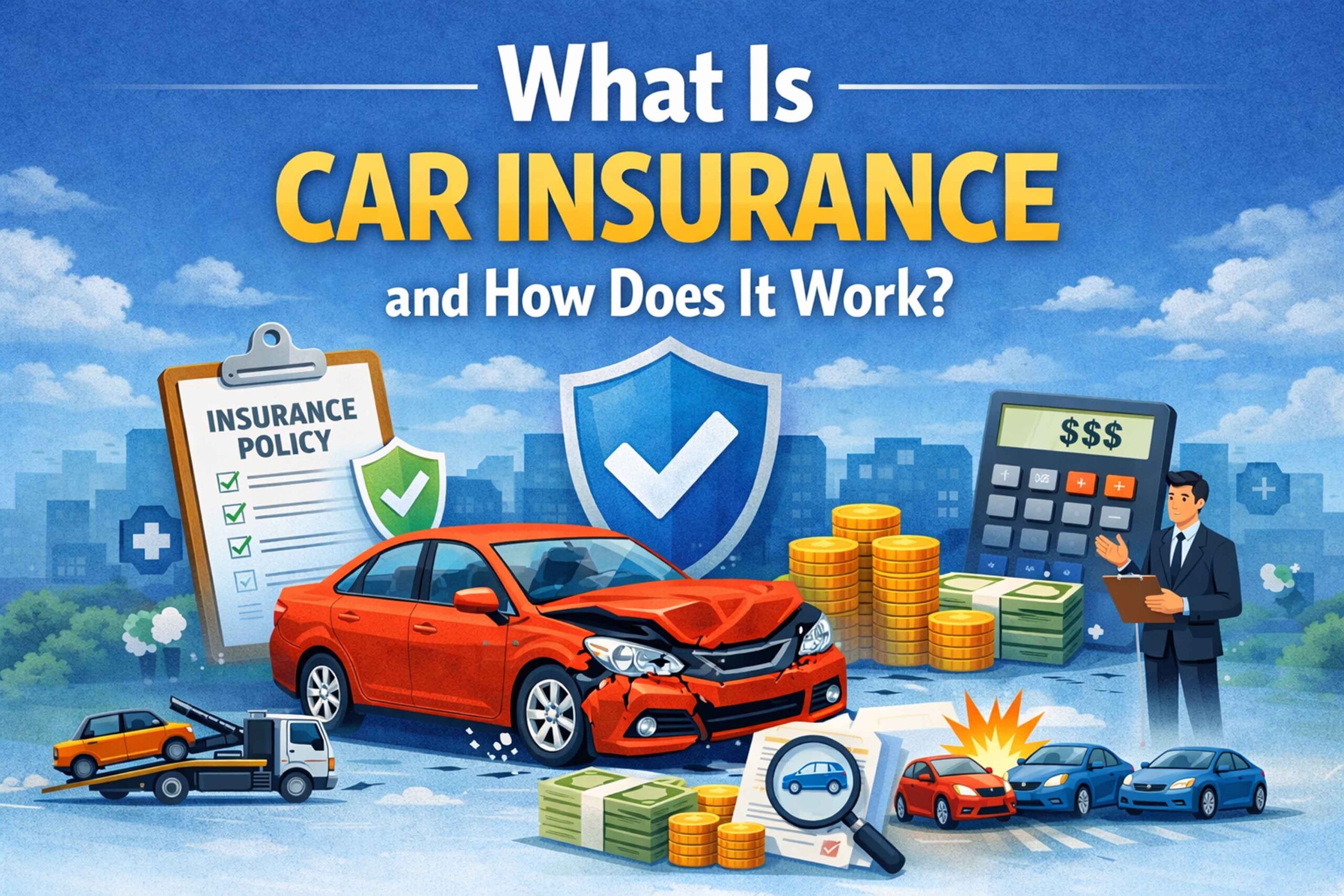
To really understand how car insurance works, imagine the whole process as a timeline. It starts before anything goes wrong. You choose a policy, sign it, pay your premium, and go on with your life. Most days, nothing happens—and honestly, that’s the best-case scenario.
But when something does happen, that’s when the policy finally steps into the spotlight. You file a claim, the insurer reviews what happened, and if the situation is covered by your policy, they help pay for repairs, medical bills, or other costs you would’ve shouldered alone.
Premiums, Claims, and Payout Process
Premiums are your “membership fee,” in a way. Paying them keeps your coverage active. When an accident occurs, you submit a claim—photos, reports, the whole package. The insurer then evaluates everything and decides how much they’ll cover.
We’ve had experiences where this process felt too slow, and others where it moved surprisingly quick. It depends on the situation. Either way, the payout is what makes the whole system worth it.
Your Responsibilities as a Policyholder
A lot of people forget that policyholders also have responsibilities. You’re expected to report information truthfully, keep your car in reasonable condition, follow the law, and notify your insurer promptly when something happens.
In short: treat the insurer like a partner, not an enemy. The more honest and organized you are, the smoother things go.
Practical Tips to Choose the Right Basic Coverage
Choosing the right basic coverage isn’t something you want to rush through. We’ve made that mistake—buying a plan because it was the cheapest or because someone said “It’s fine, just get that one.” Spoiler: it wasn’t fine.
Different drivers have different needs. A commuter who drives daily needs different protection than someone who barely uses their car. Basic coverage typically includes liability, collision, and sometimes comprehensive coverage. But the “right” mix depends on your car’s value, your budget, the area you live in, and how much risk you’re comfortable carrying.
Mistakes to Avoid When Buying Car Insurance
- Here’s what we’ve learned over time:
- Don’t choose a policy just because it’s the cheapest.
- Don’t skip reading the fine print. (We know… but still.)
- Don’t assume every provider offers the same benefits.
- And don’t underestimate your actual risk.
If you all want fewer headaches later, spend a little extra time now comparing options. Trust us—it pays off.
Conclusion
When we finally understood what car insurance really is, it felt like a weight lifted. It’s not meant to confuse us—it’s meant to protect us. Once you break it down into real-life terms, the whole thing becomes a lot less stressful.
You all deserve peace of mind every time you start the engine. And the right coverage isn’t just a box you check—it’s a long-term decision that protects your finances, your car, and honestly, your sanity.
Frequently Asked Questions (FAQ)
What is car insurance?
It’s a financial protection plan for vehicle-related risks.
Why do I need it?
To avoid paying huge repair or liability costs by yourselves.
What does basic coverage include?
Usually liability, collision, and comprehensive protection.
How are premiums calculated?
Based on risk factors like driving history, age, and location.
Can I lower my premiums?
Safe driving, discounts, and policy bundling can help.
How do claims work?
You file, insurer reviews, and they pay within policy limits.
Is choosing the cheapest plan a good idea?
Not always—it could leave you underprotected.
How long does a claim usually take?
Depends on documentation and complexity.
Is comprehensive coverage worth it?
Yes, if you live in areas with theft, storms, or high risks.
What mistakes should I avoid?
Ignoring fine print and choosing policies only based on price.